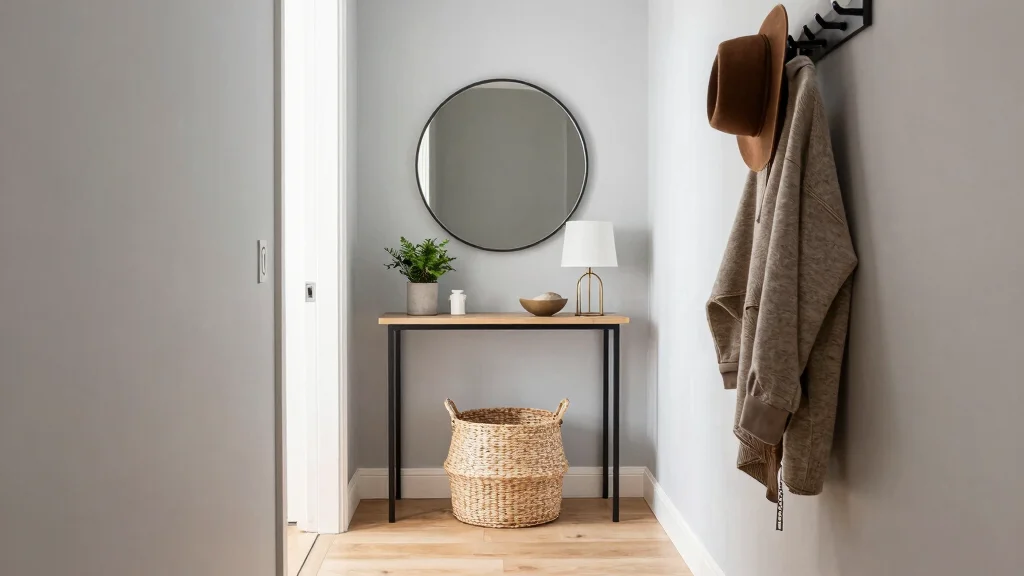
Creating a warm and inviting entryway can be a challenge, especially when you have a long, narrow space to work with. This post is all about helping you transform that often neglected area into a beautiful and functional entry. I wanted to share some long narrow entryway ideas that truly feel balanced and welcoming. Whether you’re moving into a new home, renovating, or just looking for a refresh, finding ways to maximize your small space is key.
If you’re someone who loves home decor and wants to make the most out of your entryway, this one’s for you. You probably care about creating a space that reflects your style while being practical. With these tips and tricks, you’ll find that even the tiniest hallway can shine. I’ve gathered 14 creative ideas that are stylish, functional, and perfect for making a lasting first impression. Let’s dive in and explore how you can turn your narrow entryway into a space that feels balanced and inviting.
Key Takeaways
– Vertical Storage Solutions: Maximize your space by using tall shelves or hooks that draw the eye upward, creating the illusion of a larger area while keeping it organized.
– Gallery Walls: Create a visual impact by displaying framed art or personal photos along one side of the hallway, adding personality without cluttering the floor space.
– Multifunctional Furniture: Choose pieces that serve multiple purposes, like a bench with storage underneath, to keep your entryway tidy and functional.
– Bold Wallpaper: Add depth and character with patterned wallpaper or a vibrant paint color on one wall to draw attention and make the space feel more dynamic.
– Designate a Drop Zone: Set up a specific area with baskets or trays for keys, bags, and shoes to keep the entryway organized and efficient for daily use.
1. Embrace Vertical Storage Solutions
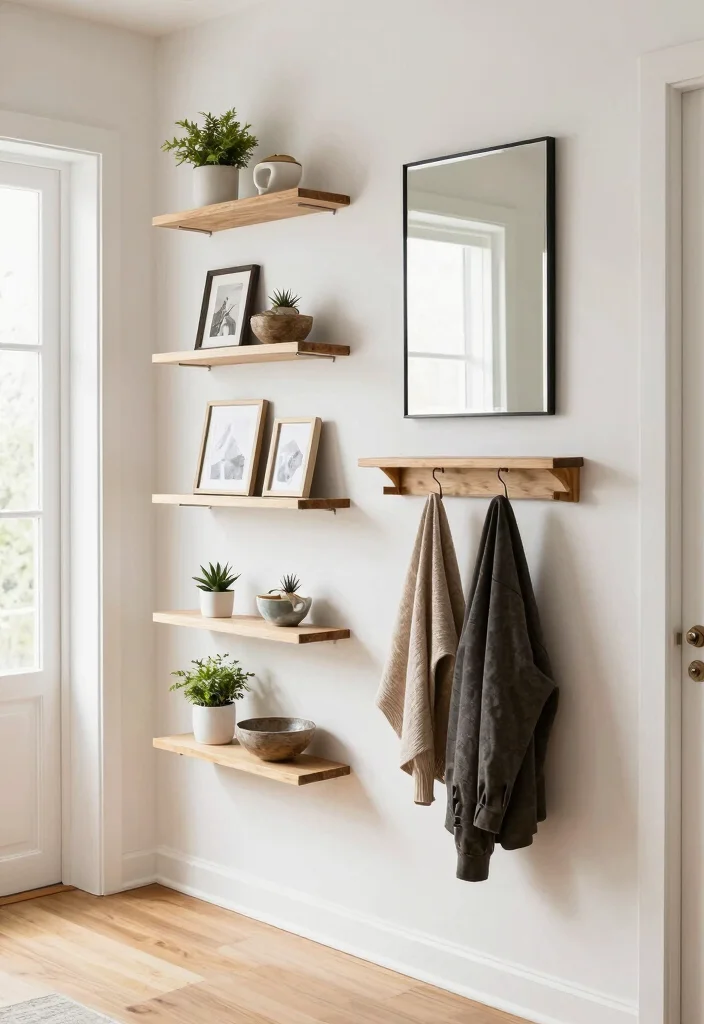
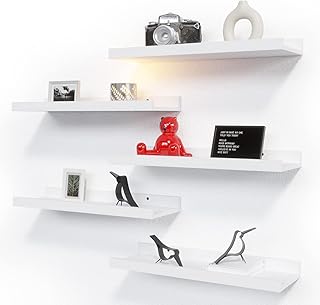
When it comes to maximizing a long, narrow entryway, vertical storage solutions shine brightly. Utilizing wall space with shelves or hooks not only keeps the floor tidy but also creates a visually appealing environment. Floating shelves can showcase stylish decor or serve practical purposes, such as storing keys and mail. Wall-mounted hooks are perfect for bags and coats, promoting an organized look while saving precious floor space. With just a few carefully placed shelves, you can transform your entryway into both a functional and beautiful space.
To implement this idea effectively, think about incorporating budget-friendly alternatives. You can find affordable shelving units at thrift stores or even create DIY versions from reclaimed wood. This approach connects to the broader trend of sustainability while enhancing the emotional comfort of your home.
Consider these elements to maximize your vertical storage potential:
– Pair floating shelves with decorative baskets for added warmth.
– Install an entryway bench with hidden storage for shoes and bags.
– Hang a long mirror above your console table to reflect light and create depth.
This design maximizes space beautifully, while the use of varied textures and materials enhances your entryway’s overall aesthetic.
Embrace Vertical Storage Solutions
Editor’s Choice




Dimensions & Size Guide
Standard Sizes & Measurements:
When planning a long narrow entryway, understanding the dimensions is crucial. Most entryways range from 3 to 5 feet wide and can vary in length significantly. The depth of your entryway defines how you can use the space effectively.
For a comfortable fit, aim for at least 3 feet of width to allow for smooth traffic flow. This width can accommodate a small bench or a narrow console table without feeling cramped. The ideal length varies, but a 10 to 15-foot entryway is common, providing ample room for decor while allowing you to keep the space functional.
Minimum requirements for proper fit or function:
– Width: At least 3 feet for movement and furniture placement.
– Length: Aim for 10 feet or more to create a balanced feel.
– Height: Standard ceiling heights of 8 to 10 feet work well, giving a sense of openness.
Space Planning Considerations:
When measuring your entryway, consider the following tips:
1. Furniture Height: Ensure that any furniture, like shelves or coat racks, doesn’t exceed 6 feet to keep the space open.
2. Distance from Walls: Leave at least 2 feet between furniture and the walls to avoid a cramped look.
3. Traffic Flow: Allow at least 3 feet of unobstructed space where you expect frequent movement.
Common mistakes include not accounting for door swing or choosing furniture that is too bulky, which can overwhelm a narrow space.
Quick Reference Table:
Size/Dimension – Best for: [use case], Minimum space needed: [measurement]
– 3 feet wide – Best for: Small console tables and narrow benches, Minimum space needed: 3 feet
– 5 feet wide – Best for: Wider furniture and coat racks, Minimum space needed: 5 feet
– 10 feet long – Best for: Entryway stylings like gallery walls and rugs, Minimum space needed: 10 feet
– 12+ feet long – Best for: Including multiple furniture pieces without crowding, Minimum space needed: 12 feet
Space Planning Tips:
1. Measure Twice: Always double-check your measurements before purchasing furniture. This can save you time and money later.
2. Sketch Your Space: Drawing a simple floor plan helps visualize how furniture will fit and flow.
3. Consider Proportions: Choose pieces that complement your space’s dimensions. Opt for slim, tall shelves instead of wide ones.
4. Test Layouts: Use painter’s tape to mark where furniture will go before making a final decision. This gives a clear visual of how the layout will work.
5. Keep It Light: Light colors can make a narrow space feel more open. Consider light-colored walls or furniture to enhance the feeling of space.
Pro Tip: The most important measurement is the width of your entryway. Ensure it’s at least 3 feet to allow for comfortable movement and functionality. A well-planned entryway not only welcomes you but also sets the tone for the rest of your home. 💡
2. Create a Gallery Wall
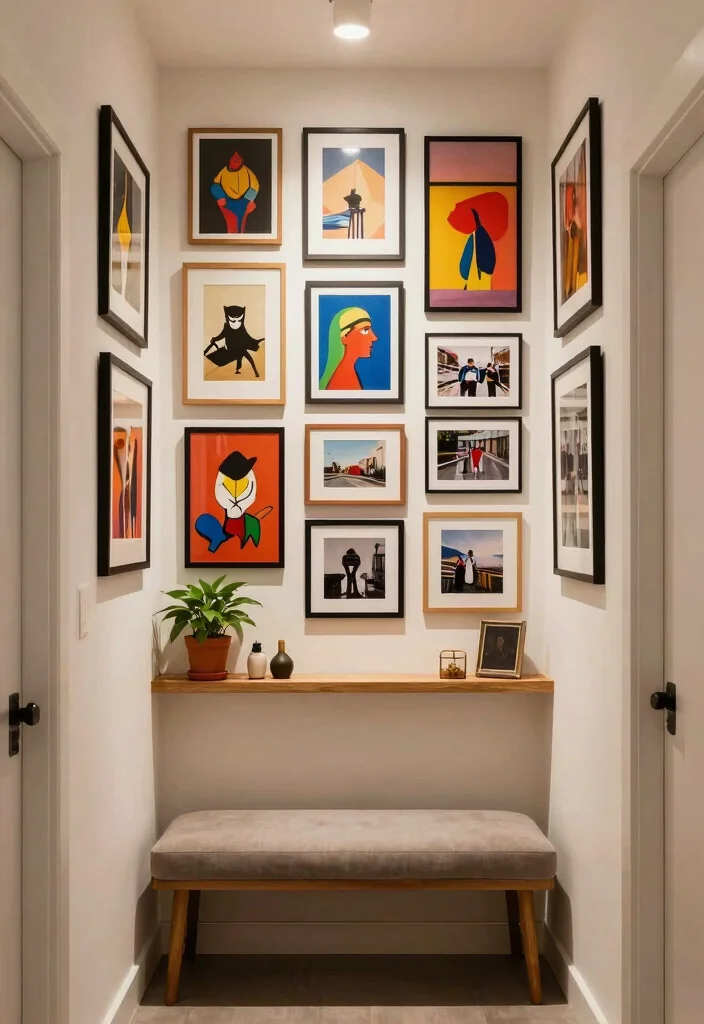
Creating a gallery wall in your long, narrow entryway invites personality and warmth into the space. By arranging framed photos, art pieces, or mirrors artistically, you can draw the eye along the hallway, adding interest. Mixing different sizes and styles of frames creates an eclectic vibe, while a cohesive color scheme can unify the look. Position your artwork at eye level and consider incorporating three-dimensional elements like small shelves for plants or decorative items to elevate the visual experience.
Practical implementation of this idea can be done with minimal effort. You might rotate seasonal themes in your gallery for a fresh feel or use washi tape to experiment with arrangement before committing. Adding a small bench creates a cozy spot to pause and admire your collection, enhancing the emotional connection to your space.
Here are some tips for crafting your gallery wall:
– Curate seasonal themes for an evolving look.
– Use washi tape for a non-permanent art arrangement.
– Add a small bench to create a cozy viewing area.
A gallery wall not only personalizes your entryway but also transforms it into an inviting and stylish environment.
Create a Gallery Wall
Editor’s Choice


3. Incorporate Multifunctional Furniture
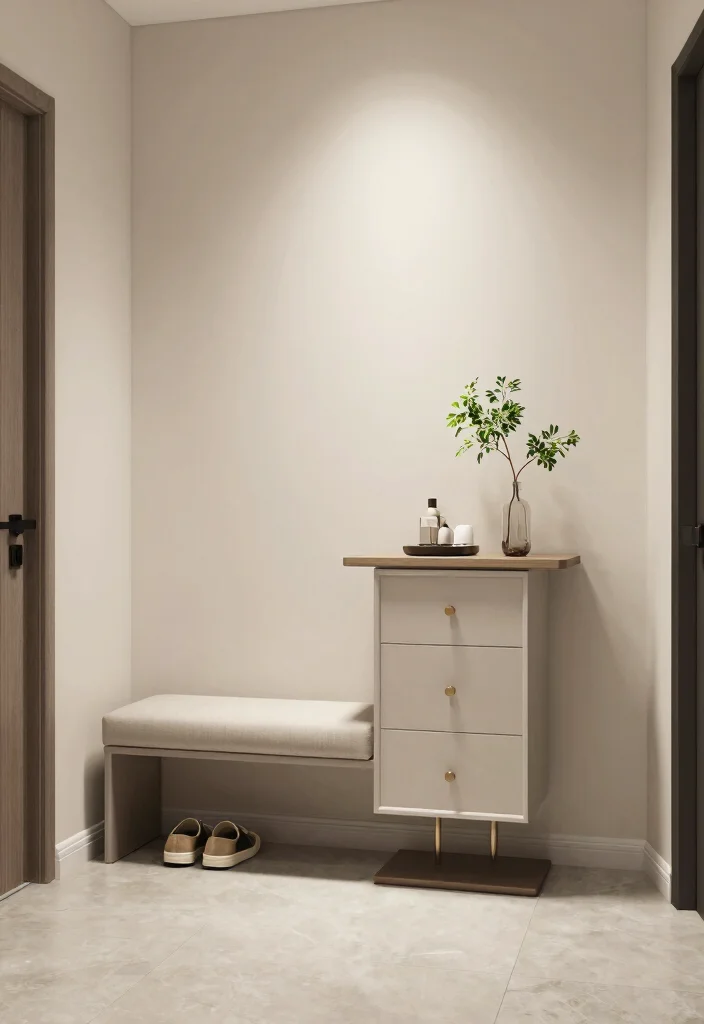
In the realm of small spaces, multifunctional furniture can truly be a lifesaver. Seek out pieces that serve dual purposes, like an ottoman that doubles as a storage unit or a bench with compartments for shoes. This approach not only conserves space but also keeps your entryway organized and tidy. A console table featuring drawers can discreetly hold essentials while still providing a surface for decorative items like vases or flowers.
To enhance this concept, consider furniture shopping at local thrift stores for unique finds or exploring online marketplaces for budget-friendly options. This aligns with the growing trend of sustainability and offers emotional comfort by creating a well-organized entryway.
Keep these tips in mind when selecting multifunctional pieces:
– Choose furniture with sleek lines to enhance openness.
– Consider tall cabinets for added storage without width concerns.
– Use a pouf or ottoman for flexible seating options.
Multifunctional furniture helps maximize both style and usability in your entryway, making it a practical choice.
4. Use Bold Wallpaper
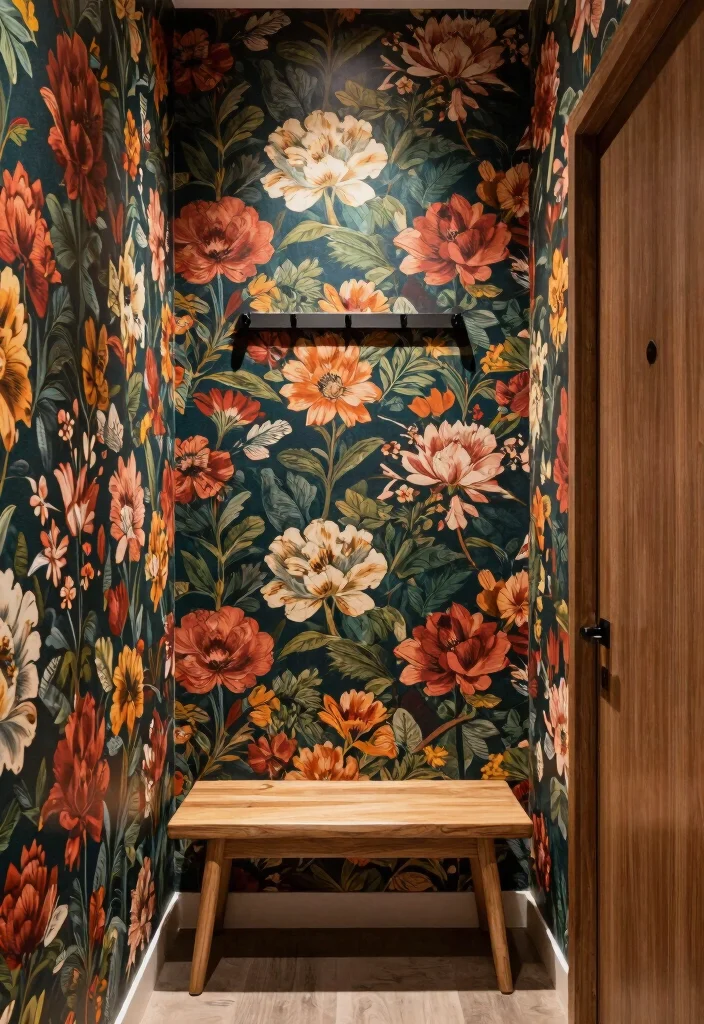
Embracing bold wallpaper can transform a narrow entryway into a statement space. An eye-catching pattern draws the eye inward, effectively creating a stunning focal point. Whether you opt for a vibrant floral motif or a geometric design, wallpaper adds depth and texture that can invigorate your surroundings. To achieve balance, pair bold wallpaper with minimal furnishings, such as a simple coat rack or bench in solid colors that complement the wallpaper’s impact.
For easy application, consider peel-and-stick wallpaper options that allow for quick updates. Using wallpaper on a single feature wall keeps the design manageable while maximizing impact. Mixing floral wallpaper with wooden furniture can create a modern equilibrium between feminine and masculine elements.
Here are some suggestions for using bold wallpaper:
– Consider peel-and-stick options for hassle-free application.
– Focus on a feature wall for manageable designs.
– Combine floral wallpaper with wooden elements for a balanced aesthetic.
Bold wallpaper breathes life into your entryway, making it a vibrant and character-filled space.
Use Bold Wallpaper
Editor’s Choice


5. Play with Lighting
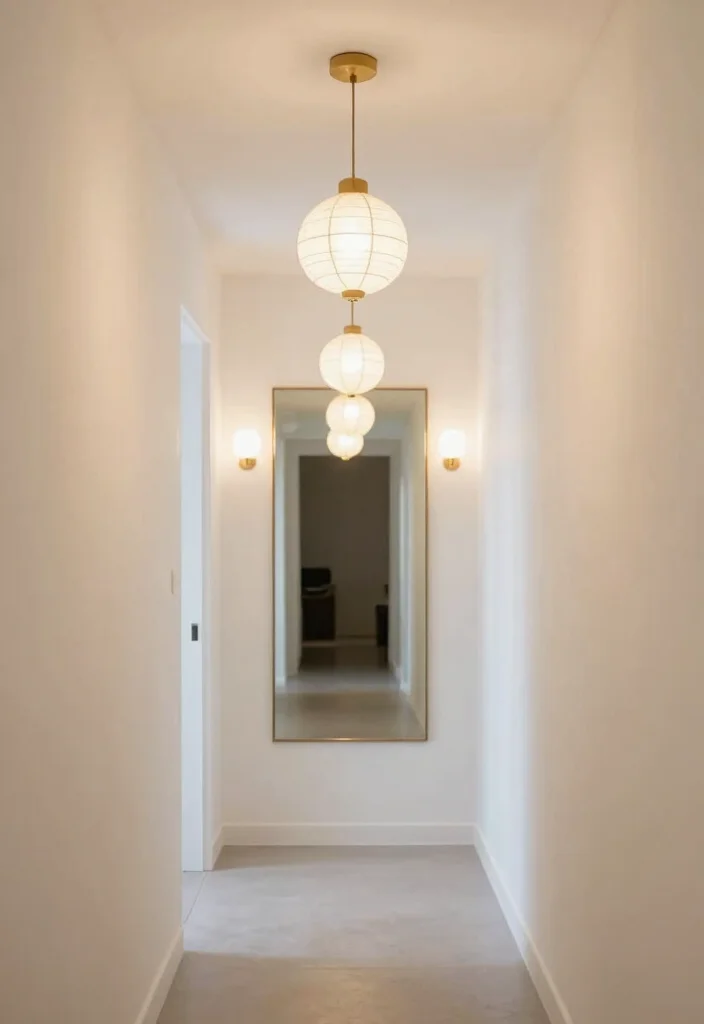
Lighting can completely transform your narrow entryway from dark and cramped to bright and inviting. Consider a mix of light sources, such as stylish sconces, overhead pendant lights, or a series of small lamps, to create a warm atmosphere. Warm light bulbs enhance this inviting ambiance, while mirrors reflect light, helping to brighten the space further. Adding dimmer switches allows for mood control, ensuring a welcoming entry for you and your guests.
To enhance your lighting scheme, explore oversized fixtures that can add grandeur to smaller spaces or incorporate LED strip lights along shelves for subtle illumination. Layering different types of lighting—task, ambient, and accent—can provide versatility and depth to your design.
Consider these lighting strategies:
– Use oversized fixtures for a dramatic effect.
– Incorporate LED strip lights for subtle, modern lighting.
– Layer different lighting types for versatility and ambiance.
Focusing on lighting can drastically change your entryway’s feel, making it a warm and welcoming space.
6. Designate a Drop Zone
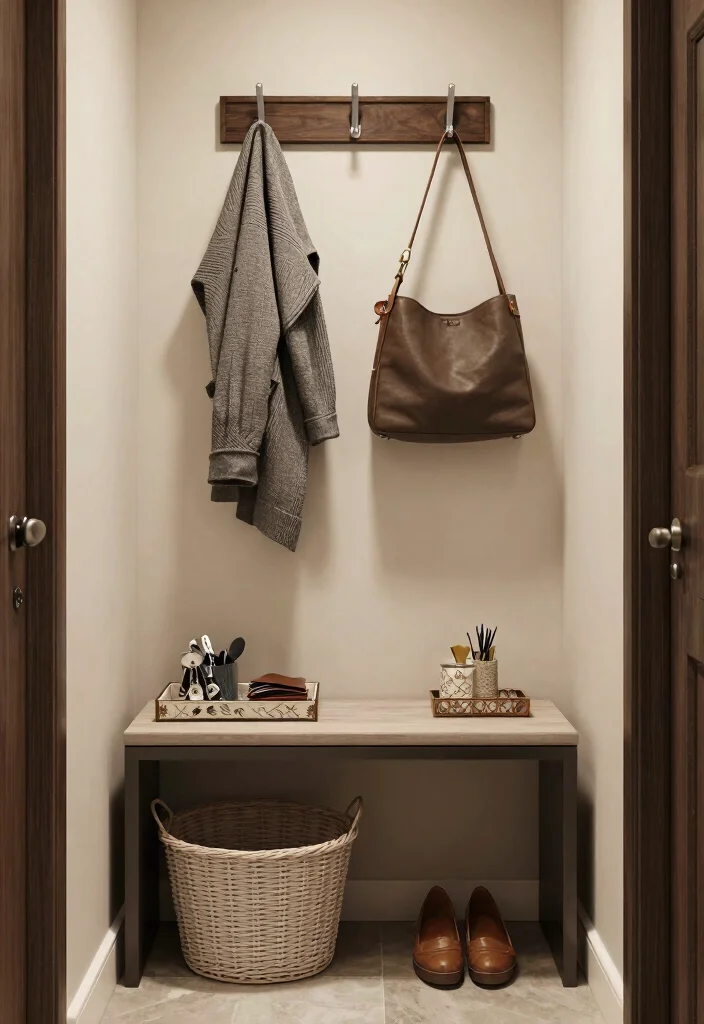
Creating a designated drop zone in your entryway significantly enhances its functionality. A wall-mounted shelf or console table can act as a dedicated space for daily items, such as keys, bags, and mail, helping to minimize clutter. Including a small bin or basket underneath for everyday shoes keeps the area organized and stylish. Establishing this clear spot prevents chaos while ensuring your entryway looks appealing.
For a practical approach, add hooks for bags and jackets to keep surfaces clear. Decorative trays can neatly hold smaller items, and color-coded baskets for family members can simplify organization. This aligns with modern trends of minimalism and organization.
Implement these ideas for an efficient drop zone:
– Add hooks for bags and jackets to maintain order.
– Use decorative trays for smaller items like keys.
– Color-code baskets for easy family organization.
A well-defined drop zone streamlines your routine, ensuring your entryway remains chic and organized.
Fun fact: a dedicated drop zone in an entryway can cut daily clutter by up to 60%. A wall-mounted shelf and a small bin keep keys, mail, and shoes organized for long narrow entryway ideas, guiding flow and making the space feel balanced and calm.
7. Add a Touch of Greenery
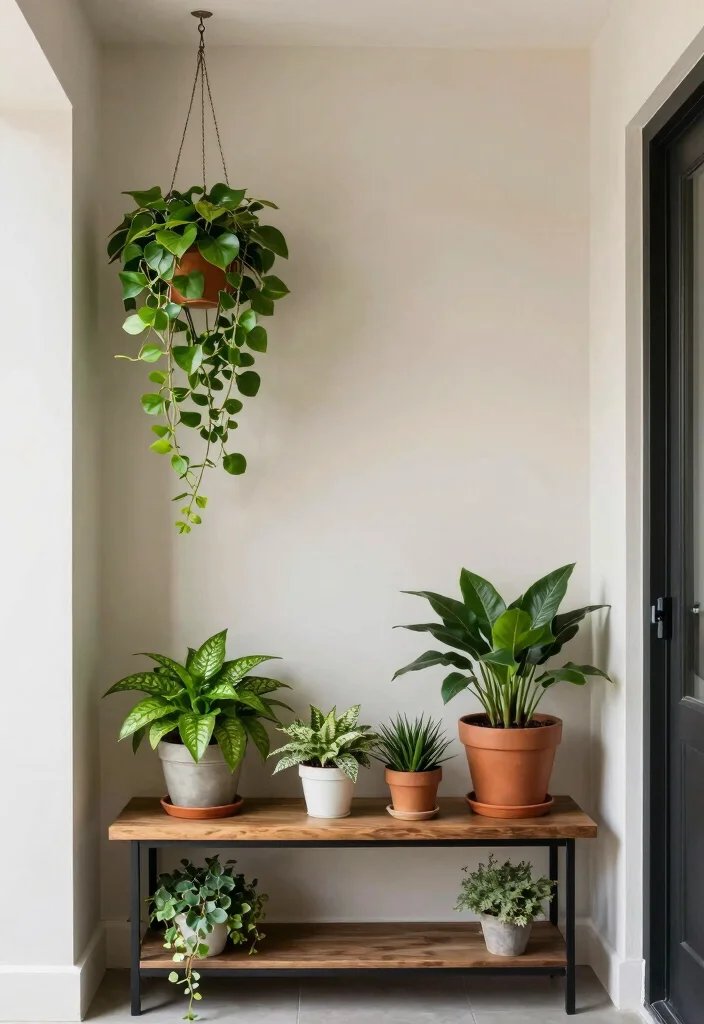
Incorporating plants into your narrow entryway can infuse life and freshness into the space. Greenery not only beautifies the area but can also improve air quality. Opt for low-maintenance plants like snake plants or pothos, which thrive in low light. To save floor space, consider vertical planters or wall-mounted pots that add a natural touch. For a pop of color, flowering plants can brighten the area year-round.
Utilize hanging planters to draw the eye upwards, and group different-sized plants for a visually dynamic display. Rotating seasonal flowers can keep the look fresh and inviting, enhancing the emotional atmosphere of your entryway.
Here’s how to effectively integrate greenery:
– Use hanging planters to elevate visual interest.
– Group plants of varying sizes for a striking display.
– Rotate seasonal flowers to refresh your entryway’s look.
Adding plants is a simple yet powerful way to bring warmth and vibrancy to your entryway.
Add a Touch of Greenery
Editor’s Choice


8. Opt for a Muted Color Palette
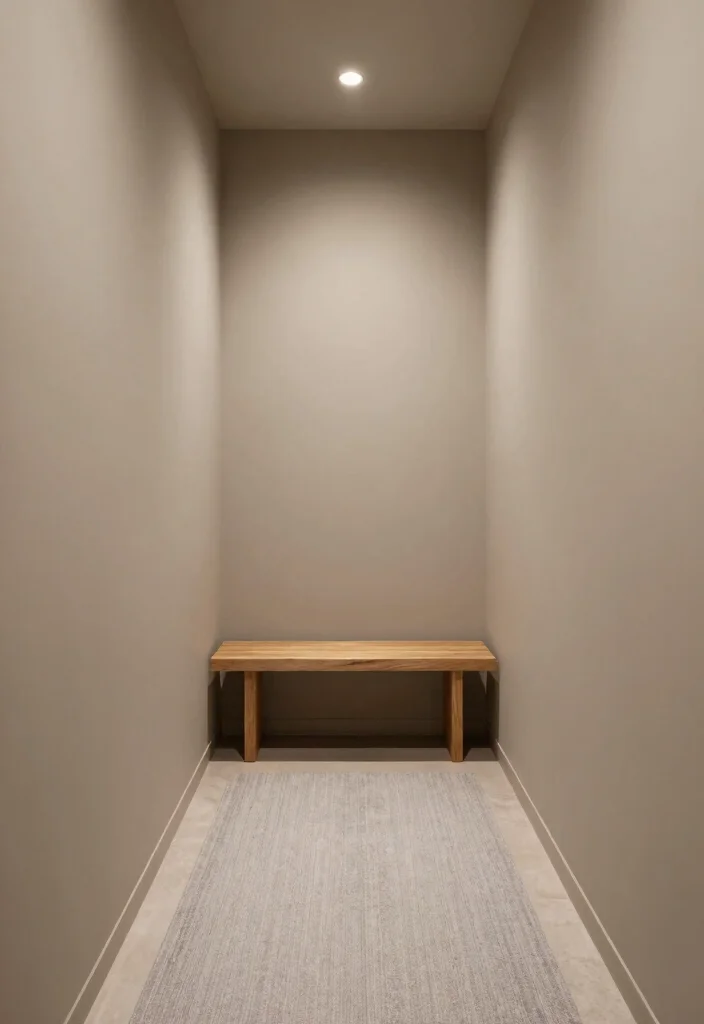
Selecting a muted color palette can enhance the spaciousness of a narrow entryway. Soft creams, pale blues, and gentle grays create an open and airy feel, making the area inviting. These colors blend harmoniously, allowing you to introduce textures through fabrics and materials without overwhelming the senses. Pairing these hues with wooden accents or metallic elements can catch light and add warmth, creating a serene entrance to your home.
To implement this idea, use contrasting tones for visual interest while keeping the overall palette soft. Incorporating textures through rugs or wall hangings adds depth without relying on bold colors. Choosing furniture in complementary muted shades maintains a cohesive feel throughout the space.
Consider these strategies for a muted color palette:
– Use contrasting tones for subtle visual interest.
– Incorporate textures through rugs or wall hangings.
– Choose furniture in complementary muted shades for harmony.
A serene color palette transforms a narrow entry into a welcoming and elegant space.
9. Focus on Functional Decor
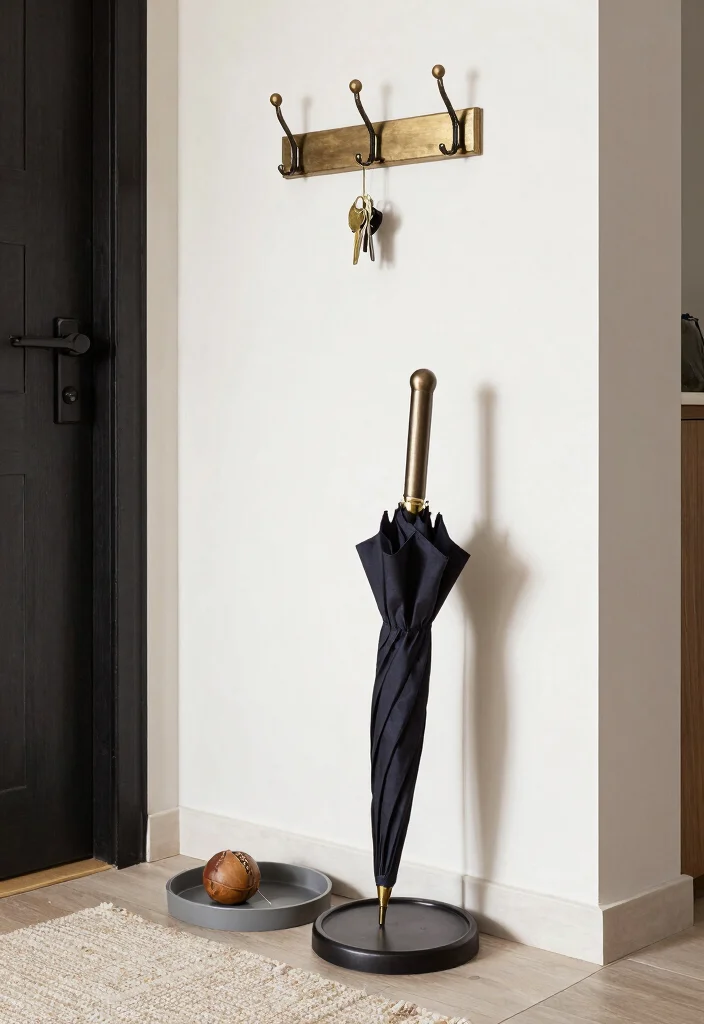
Decor doesn’t have to be solely aesthetic; it can serve a functional role as well. Seek decorative items that enhance both style and usability in your entryway. A chic umbrella stand can be both practical and visually appealing, while artful hooks for coats and beautiful trays for holding keys add charm. Striking this balance ensures your entryway is organized yet stylish, essential in smaller spaces.
To enhance functionality, use decorative baskets for chic storage solutions or opt for a statement piece that serves a purpose, like a decorative ladder for hanging scarves. Selecting quality items that reflect your personal style elevates the overall aesthetic while maintaining practicality.
Here are some tips for blending decor with functionality:
– Use decorative baskets for stylish storage solutions.
– Choose a statement piece that serves a purpose.
– Select quality items that reflect your style and elevate the space.
Balancing decor with functionality can significantly enhance your entryway’s design while ensuring it remains practical.
10. Create Zones with Rugs
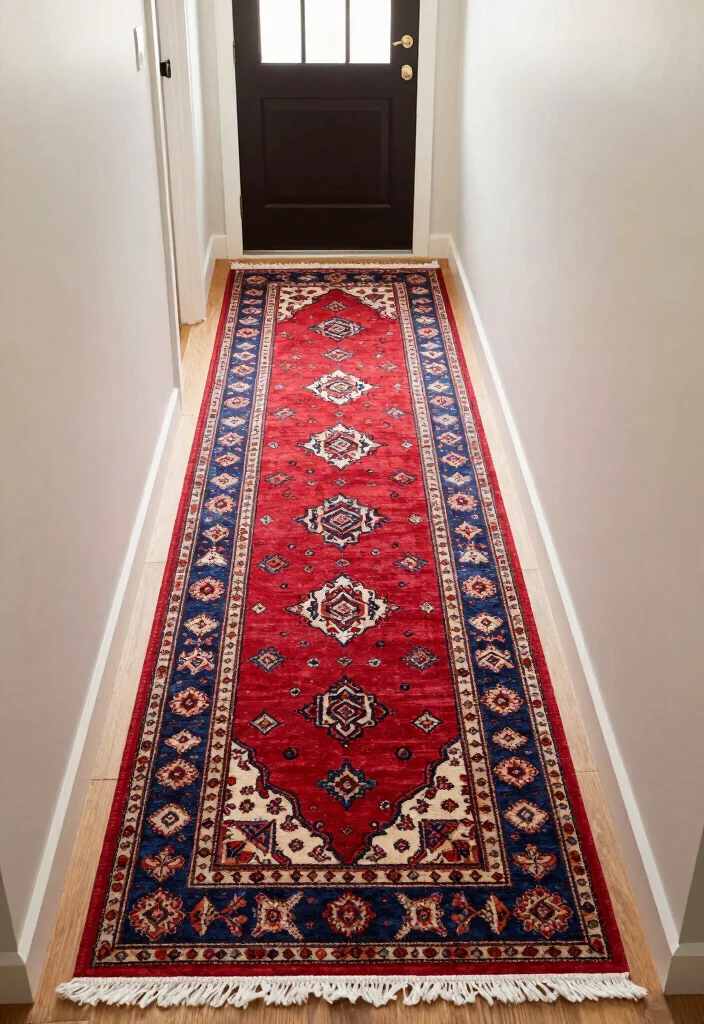
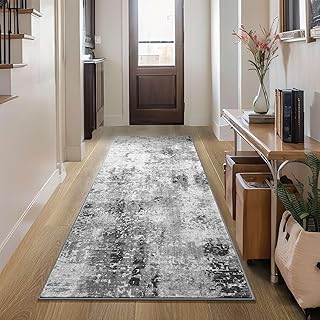
Strategically using rugs can create visual zones in a narrow entryway. A runner rug can effectively delineate the entry space from other areas of the home while introducing color or pattern. Choose a rug that complements your overall design style and enhances the entryway’s look. Ensure it’s durable and easy to clean, as entryways typically experience high foot traffic. Layering rugs can also add texture and interest, making the area feel more inviting.
To keep your rug in place, consider using a non-slip pad underneath, which adds safety to the space. Opt for lightweight materials that are easy to vacuum, and if your entryway opens to other areas, consider using contrasting color schemes to define different spaces.
Here are some rug strategies:
– Use a non-slip pad to keep your rug secure.
– Choose lightweight materials for easy maintenance.
– Implement contrasting colors to define various areas.
Rugs enhance the overall design while grounding the space, making them essential in any entryway.
Create Zones with Rugs
Editor’s Choice


11. Incorporate Personal Mementos
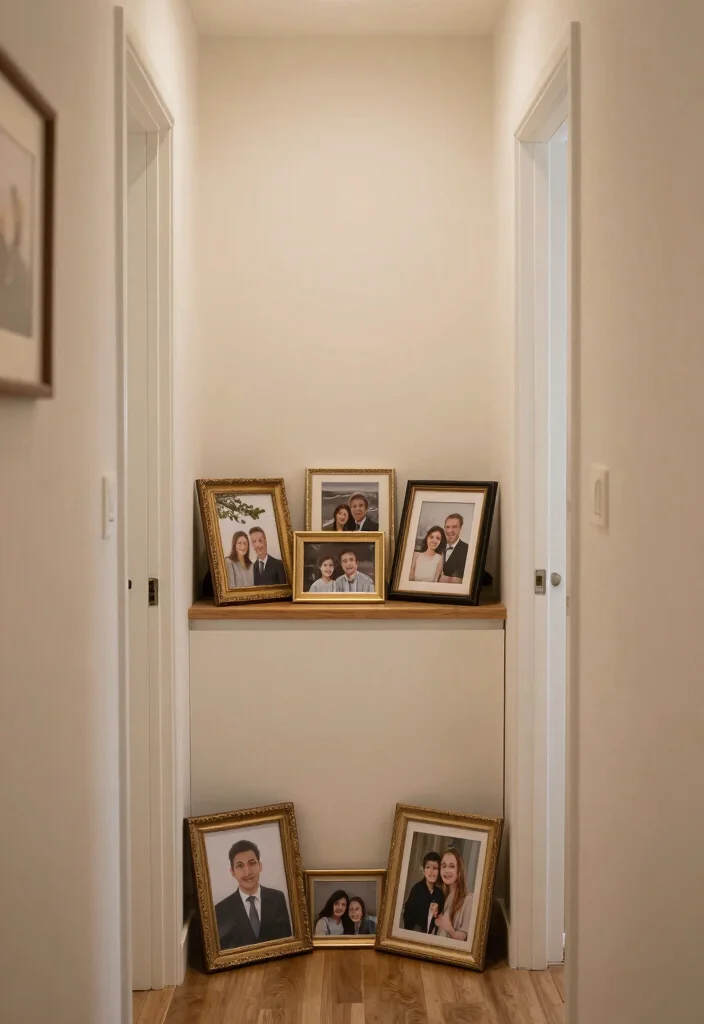
Incorporating personal mementos can make your narrow entryway feel uniquely yours. Family photos, travel souvenirs, or cherished artwork infuse warmth and character into the space. These items tell your story, creating a welcoming environment for guests. Utilize a small shelf or dedicated area to display these personal touches, but be cautious not to overcrowd; select a few meaningful pieces for a clean yet personal aesthetic.
For a curated effect, mix personal items with stylish decor, and use small frames for a cohesive look that doesn’t overpower the space. Regularly rotating displayed items can keep your entryway feeling fresh and engaging.
Consider these tips for showcasing personal mementos:
– Mix personal items with stylish decor for a curated look.
– Use small frames for a cohesive display.
– Regularly rotate items to keep the space feeling fresh.
Personal mementos enhance your entryway, making it feel warm and inviting.
Personal mementos turn a long narrow entryway into a welcoming story. Keep 3 meaningful pieces on a small shelf to add warmth without clutter, and watch your long narrow entryway ideas feel balanced and lived-in.
12. Utilize Built-in Features
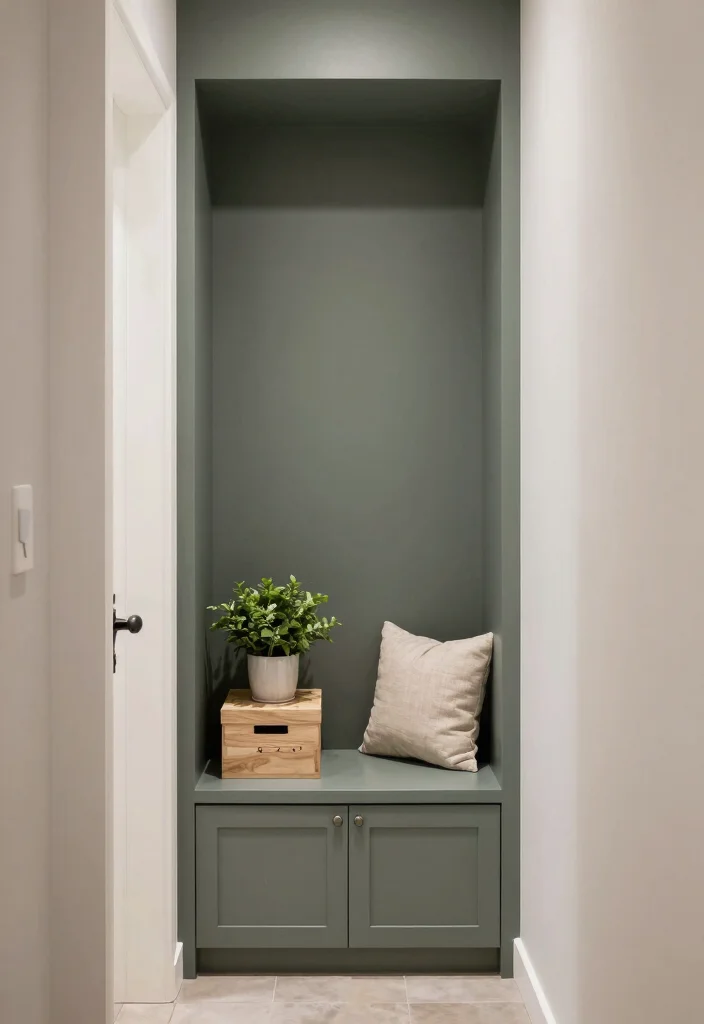
Maximizing built-in features like nooks or alcoves in your entryway can enhance both style and functionality. These unique architectural elements provide great opportunities for creative storage or decorative displays. Consider using the space for a built-in bench or shelves to house plants or decorative boxes. If room allows, you could even create a small reading nook with comfortable seating, making the most of your entryway’s potential.
To highlight these features, paint them a contrasting color to make them pop. Decorative boxes can help hide clutter while maintaining a minimalist aesthetic, and adding cushions or throws can introduce comfort and style.
Here are some ideas for utilizing built-in features:
– Paint built-ins a contrasting color to stand out.
– Use decorative boxes to conceal clutter.
– Add cushions or throws for added comfort and design.
Utilizing built-in features creates a unique and cozy entryway that feels thoughtful and curated.
13. Accentuate with Unique Accessories
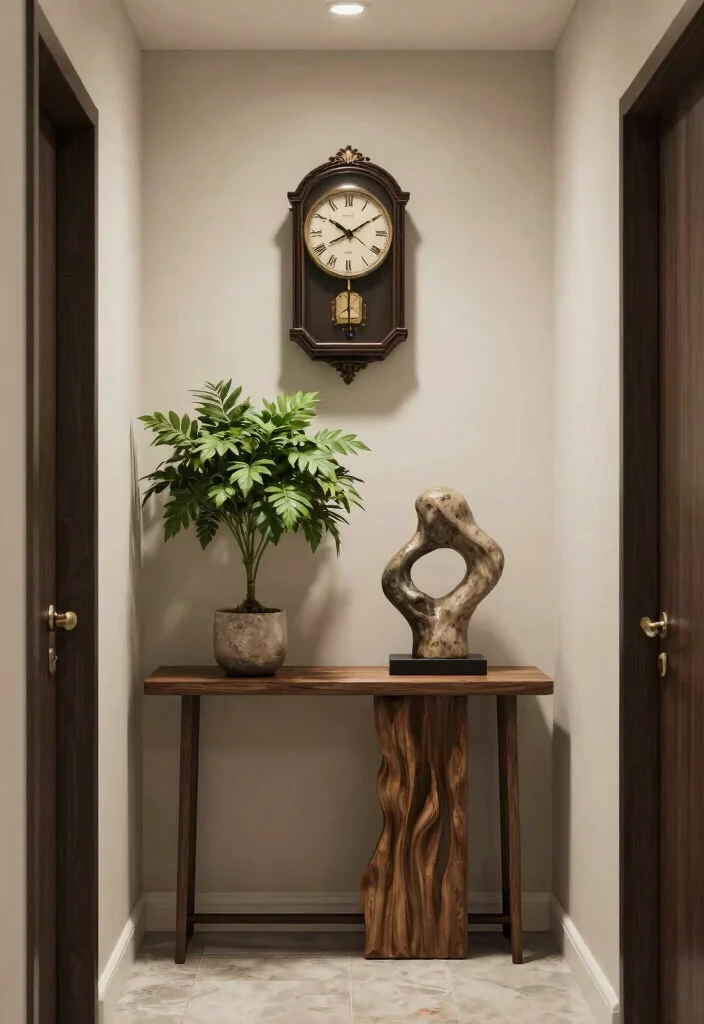
Unique accessories can infuse flair into your narrow entryway while showcasing your personal style. Look for statement pieces like a vintage clock, an oversized plant, or an artistic sculpture to create conversation starters and focal points. Be mindful of scale; larger items can add depth, while smaller accents can create interest without overwhelming the space. Mixing textures, colors, and shapes enhances visual appeal, keeping your entryway engaging.
For a layered effect, consider using a variety of materials like metal, wood, and glass. Incorporate quirky items that truly reflect your personality, and balance bold accessories with simpler decor to maintain harmony.
Here are some tips for accentuating your entryway with unique accessories:
– Use various materials for a layered effect.
– Incorporate quirky items that showcase your personality.
– Balance bold accessories with simpler decor.
Strategic accessorizing can elevate even the simplest entryway into a stylish showcase of your tastes.
14. Experiment with Layout
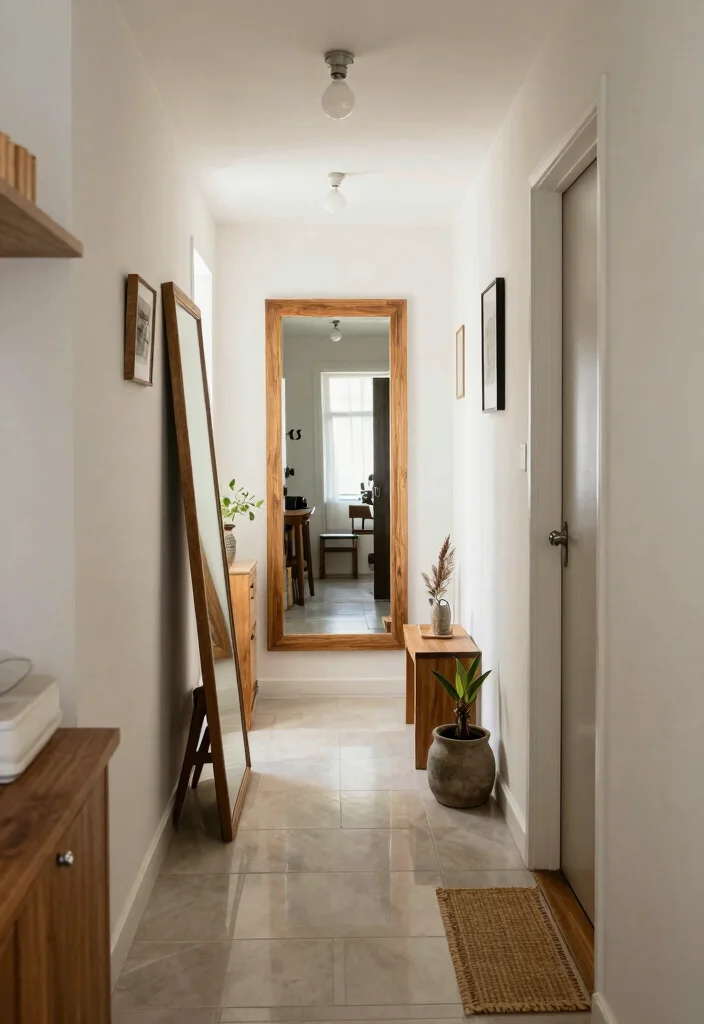
Don’t hesitate to experiment with the layout of your narrow entryway! Rearranging furniture or decor can dramatically alter how the space feels. Try angling furniture for a dynamic flow or placing a mirror at the end of the hallway to create an illusion of depth. Taking the time to visualize different layouts enables you to discover what works best for both your style and functional needs.
To explore layout possibilities, move furniture slightly to see how it impacts the space. Ensure pathways remain clear for easy movement, and use painter’s tape to outline furniture arrangements before shifting heavier items.
Consider these tips for experimenting with your layout:
– Move furniture slightly to assess spatial impact.
– Keep pathways clear for easy navigation.
– Use painter’s tape to visualize arrangements.
A thoughtfully arranged layout can make your entryway feel more spacious and inviting while showcasing your design sensibilities.
Long narrow entryway ideas thrive on simple tweaks. Move furniture just a notch, angle pieces for flow, and add a mirror to create depth—your space will feel balanced and welcoming in minutes.
Conclusion
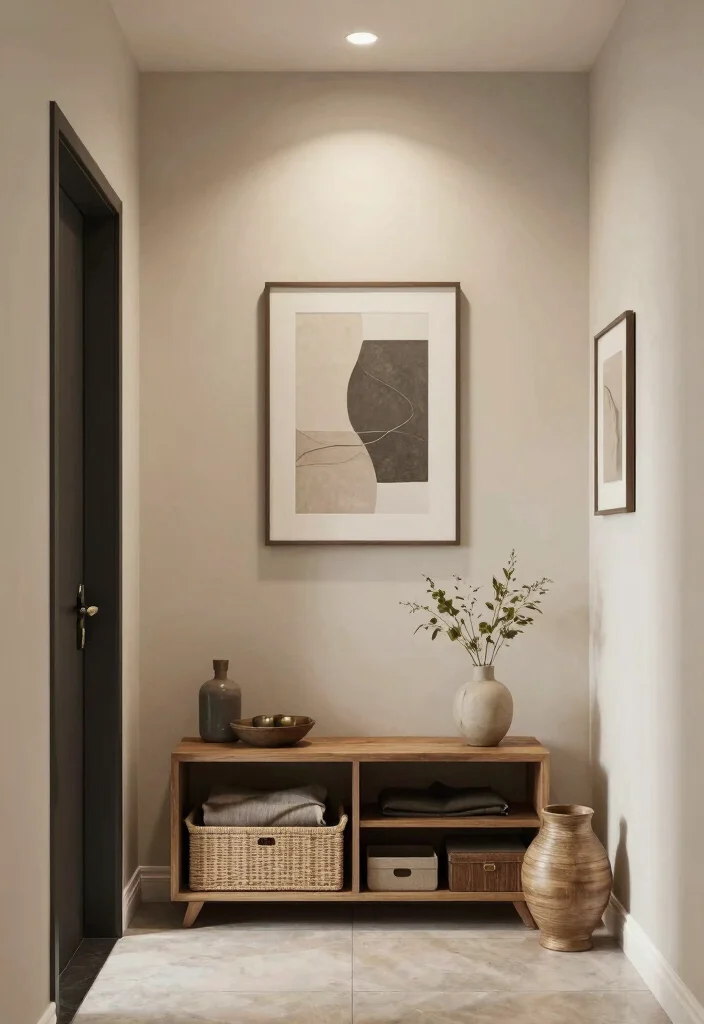
Transforming a long narrow entryway into a balanced and inviting space can be accomplished with the right ideas and touches. Emphasizing functionality while infusing personal style is key to creating an area that works well and feels welcoming. With creativity and thoughtful choices, your entryway can become a beautiful first impression of your home.
Remember, it’s all about finding the right balance and layering elements to enhance your space. Which idea will you try first?
Note: We aim to provide accurate product links, but some may occasionally expire or become unavailable. If this happens, please search directly on Amazon for the product or a suitable alternative.
This post contains Amazon affiliate links, meaning we may earn a small commission if you purchase through our links, at no extra cost to you.
Frequently Asked Questions
What are practical long narrow entryway ideas to balance style and function?
Here are practical long narrow entryway ideas that balance style and function.
Start with a focal point—a slim console paired with a tall wall mirror—to create symmetry and depth. This entryway design trick helps the space feel wider without crowding it.
Choose a light color palette with matte finishes and minimal hardware to keep the look airy. Add smart storage like a slim shoe cabinet or floating shelves to keep clutter at bay. Finish with a compact bench or wall-mounted hooks for balanced interior styling.
How can I maximize storage in a narrow hallway without clutter?
Maximizing storage in a narrow hallway is totally doable with slim, purposeful pieces.
Install wall-mounted organizers and hooks to keep doors and surfaces clear. A slim shoe cabinet or floating shelves above a slim bench add storage without stealing width. Consider a shallow built-in with hidden drawers or a mirror-front cabinet to hide mail and keys. Use small space solutions and keep the overall entryway design cohesive for a clean, open look.
What lighting and mirrors help a narrow entryway feel open and balanced?
Lighting and mirrors are your best friends in a long, narrow entryway.
Layer lighting with a ceiling fixture plus wall sconces or slim LEDs along the wall to brighten every corner. A large, well-framed mirror opposite a light source expands the view and adds depth—great for narrow hallway decor and balanced interior styling. Finish with a warm color temperature to avoid a sterile feel, and keep cords hidden for a clean look.
What color palettes and materials work best for modern entry decor in long narrow entryways?
For modern entry decor in long narrow entryways, go light and bright with color and natural materials.
Try white, ivory, or soft grays on walls with pale trim to maximize light. Pair with warm wood or bamboo for texture and balanced interior styling. Use matte metal hardware and glass accents to keep the look contemporary without weighing the space down. Avoid heavy dark colors in large blocks to prevent a cramped feel; instead, layer textures for depth. This approach supports modern entry decor and balanced interior styling.
Can you share a quick 5-step plan to transform a long narrow entryway into a welcoming space?
Absolutely! Here’s a quick 5-step plan you can start today:
1) Measure the entry and map the traffic flow. 2) Choose a focal point (a slim console with a mirror or artwork). 3) Pick slim storage and seating with hidden storage. 4) Plan layered lighting (ceiling light + wall sconces). 5) Add color, texture, and a few personal touches to create warmth. This approach uses small space solutions and keeps entryway design coherent and balanced interior styling.